Productive
Automate the repetitive work. Less status chasing, more actual selling and servicing.
Solutions / Team
Lead routing, sales process automation, quote approvals, and renewal motions all run reliably on Unmeshed, connected to the GTM systems your team already uses.


1 hr
To go live with your first RevOps workflow
200+
GTM systems you can connect
0
Manual handoff steps needed
Trusted by GTM and Revenue teams at leading organisations








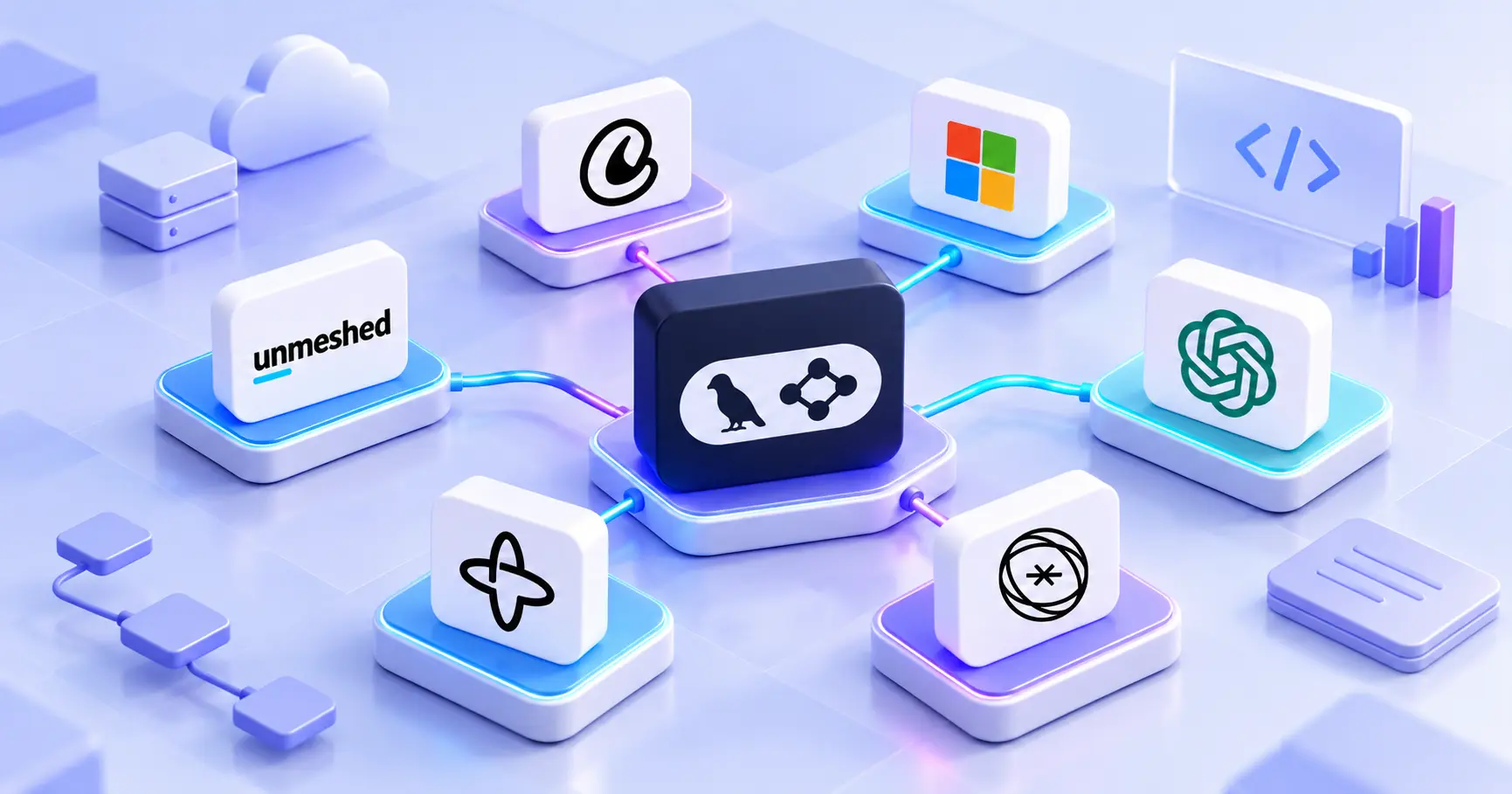
Pick the workflow that causes the most pain right now. Build it once and every step runs in order, every owner gets notified, and every system stays in sync.
No qualified lead should sit unrouted because of an incomplete field or a missing owner assignment. Unmeshed captures, validates, enriches, and routes every lead automatically the moment it arrives.
Lead Lifecycle and Assignment Automation
Receive lead event
# step_1
Validate payload and source
# step_2
Enrich account and contact context
# step_3
Score and classify lead
# step_4
Route to owner queue
# step_5
Publish assignment and SLA start
# step_6
Why Unmeshed Works Well for RevOps
Revenue operations teams need clean data, fast handoffs, and reliable sales process automation. These capabilities make that possible without manual coordination overhead.
Automate the repetitive work. Less status chasing, more actual selling and servicing.
Handoffs have explicit owners and checkpoints. No lead disappears between teams.
Activity, engagement, and support signals feed into one execution context for better GTM decisions.
Pipeline and customer data stays synchronized and normalized across every system of record.
AI Cost Efficiency
When you run AI inside a RevOps workflow (lead scoring, enrichment calls, signal classification), Unmeshed enforces the token limits you configure. Every execution respects those settings.
Uncontrolled AI Execution
With Unmeshed
Token Limits Per Step
Configure max tokens on your lead scoring, enrichment, or signal classification step. Executions enforce the limit every time.
ai_step(
  model: "gpt-4o",
  max_tokens: 256,
  prompt: score_lead_prompt
)
Executions Respect Settings
Every workflow run picks up your token configuration. No step runs outside the bounds you set, regardless of pipeline volume.
AI Inside The Workflow
Routing rules, field validation, and ownership mapping are deterministic. AI handles the parts that genuinely need it.
Use these blueprints for phased RevOps implementation and team rollout. Pick the one causing the most friction first.
One reminder, sent only if they actually need one.
When a contact gets hot, create the lead only if one does not already exist.
Know which signups matter and alert your team before you've had a chance to check your inbox.
Turn the Stripe, Shopify and internal webhooks about one order into a single record you can trust.
Why Unmeshed for RevOps
Built by the team behind Netflix Conductor, rebuilt for modern revenue operations with reliable execution, clear ownership, and a full audit trail across every GTM motion.
Connect your first GTM system and deploy a workflow in about 60 minutes with no IT project required.
Salesforce, HubSpot, Marketo, Outreach, Gong, Zendesk and 200 more native integrations across your full GTM stack.
Lead routing, handoffs, approvals, forecasting, renewals all running from one platform with shared visibility across your team.
Keep routing and qualification logic in decision steps so you can update rules without touching the underlying workflow.
Every assignment, handoff, approval, and escalation gets recorded with a timestamp and owner so your RevOps data stays trustworthy.
Set a response window on any step and if an owner goes quiet, the next person in the chain gets notified automatically.
Integrations
Connect your CRM, marketing, and billing tools into one coordinated process with 200 plus native integrations across your full revenue stack so every GTM system stays in sync.
CRM
Salesforce, HubSpot, Pipedrive, Zoho CRM
Marketing
Marketo, HubSpot Marketing, Pardot, Eloqua
Sales Engagement
Outreach, Salesloft, Apollo, Gong
Customer Success
Gainsight, ChurnZero, Zendesk, Intercom
Billing and Finance
Stripe, Zuora, Chargebee, NetSuite
New integrations shipped every week
From the Blog
Start with the handoff or routing workflow your team complains about most. Build it on Unmeshed, go live in under an hour, then roll it out across your GTM stack.